#Google posts the December 2026 core update before it starts
On November 24, 2026, Google posted the December 2026 core update to its Search Status Dashboard before the update began. The same day, the documentation changelog added a ranking hub with three new pages: Our principles for ranking results, How to stay informed on Google Search ranking updates and Submit feedback about ranking changes in Google Search. The generative AI control and attribution pages from the same day are in our post on those pages.
#What the December 2026 core update targets
The dashboard entry names two areas: how Google's systems understand and rank relevant content, "including for longer and more complex questions", and personalized results for people who have personalization turned on. It applies to all locations and languages where Google Search is available, and Google's usual core update guidance applies. The only timing given is December 2026.
A Google spokesperson told Search Engine Roundtable "We don't have a date yet", and said Google will announce the rollout on the day it starts. The same report notes that Google had said many times it does not preannounce core updates. The November 2026 core update, for comparison, went on the dashboard on November 10 as it was released. Search Engine Journal reports that the November update finished the same morning, after nearly 14 days.
#When Google now gives notice
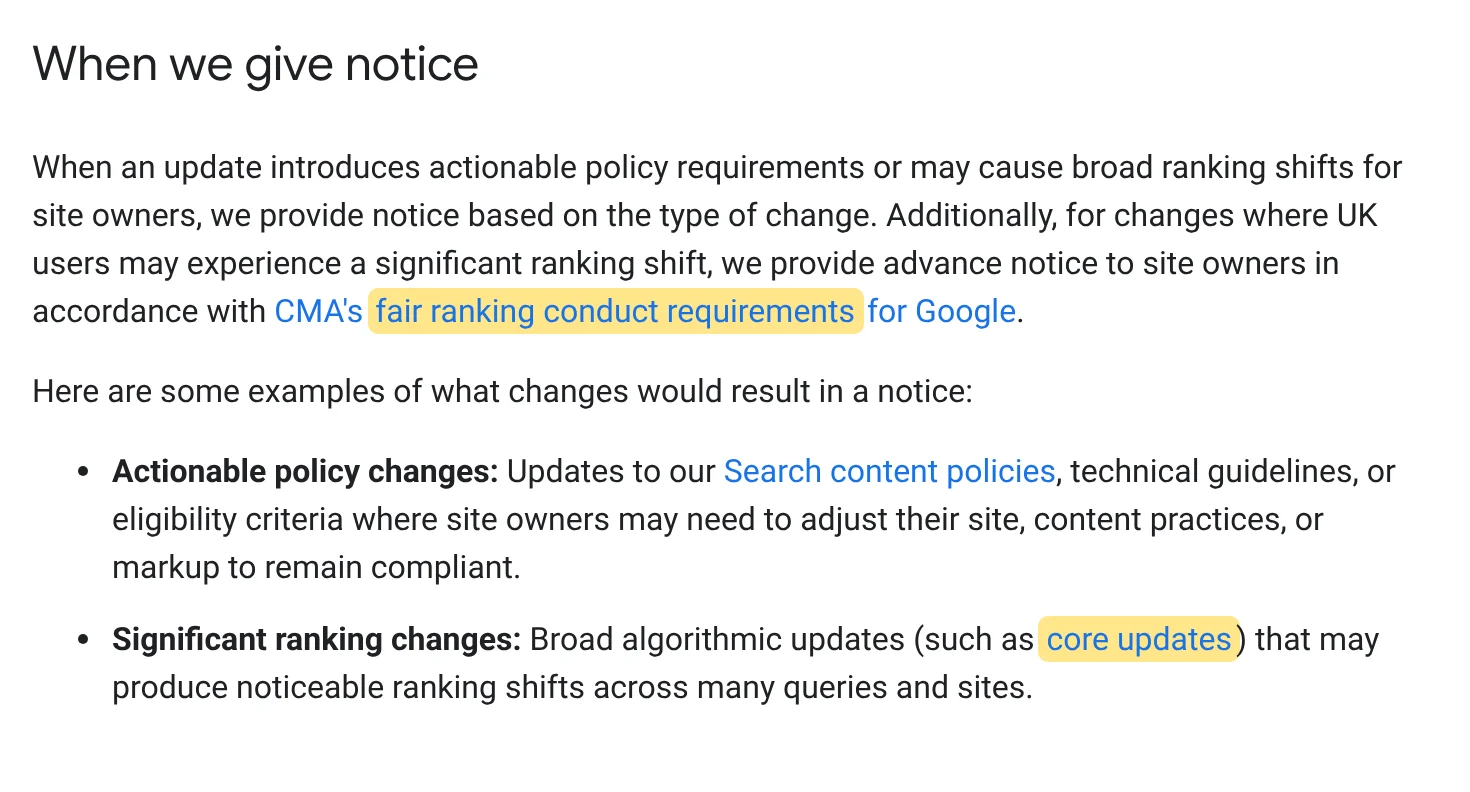
The stay-informed page lists two kinds of change that get notice:
| Kind of change | Google's examples |
|---|---|
| Actionable policy changes | Updates to Search content policies, technical guidelines or eligibility criteria that may mean changes to a site, its content practices or its markup |
| Significant ranking changes | Broad algorithmic updates, such as core updates, that may move rankings across many queries and sites |
For changes where UK users may see a significant ranking shift, the page ties the notice to the UK Competition and Markets Authority's fair ranking conduct requirement. That requirement applies from December 17, 2026 and sets minimum notice periods of 15 or 30 business days. Google's page gives no number of days for any kind of change.
Preannouncements, rollout start dates and completion notices go on the Search Status Dashboard, which has an Atom and RSS feed. Major updates also appear on the Search Central Blog and the documentation changelog. After an update, Google asks site owners to wait until it is marked complete, plus at least a week of data, before judging traffic changes in Search Console.
#What Google's ranking principles claim
The principles page names three principles: users come first, consistent systems across all types of results, and rigorous testing. The claims site owners can hold Google to:
- Web listings, AI Overviews, carousels, images and videos are evaluated on the same criteria, "how useful a result is for the query". No result type gets preferential treatment.
- Google makes no manual adjustments to rankings, except to comply with legal obligations or apply its Content Policies for Search.
- Google does not design ranking systems or AI models to favor any site's interests. The hub adds that it never accepts payment to rank pages higher in organic results.
- Every ranking change is tested for usefulness, and results are judged against the public Search Quality Rater Guidelines.
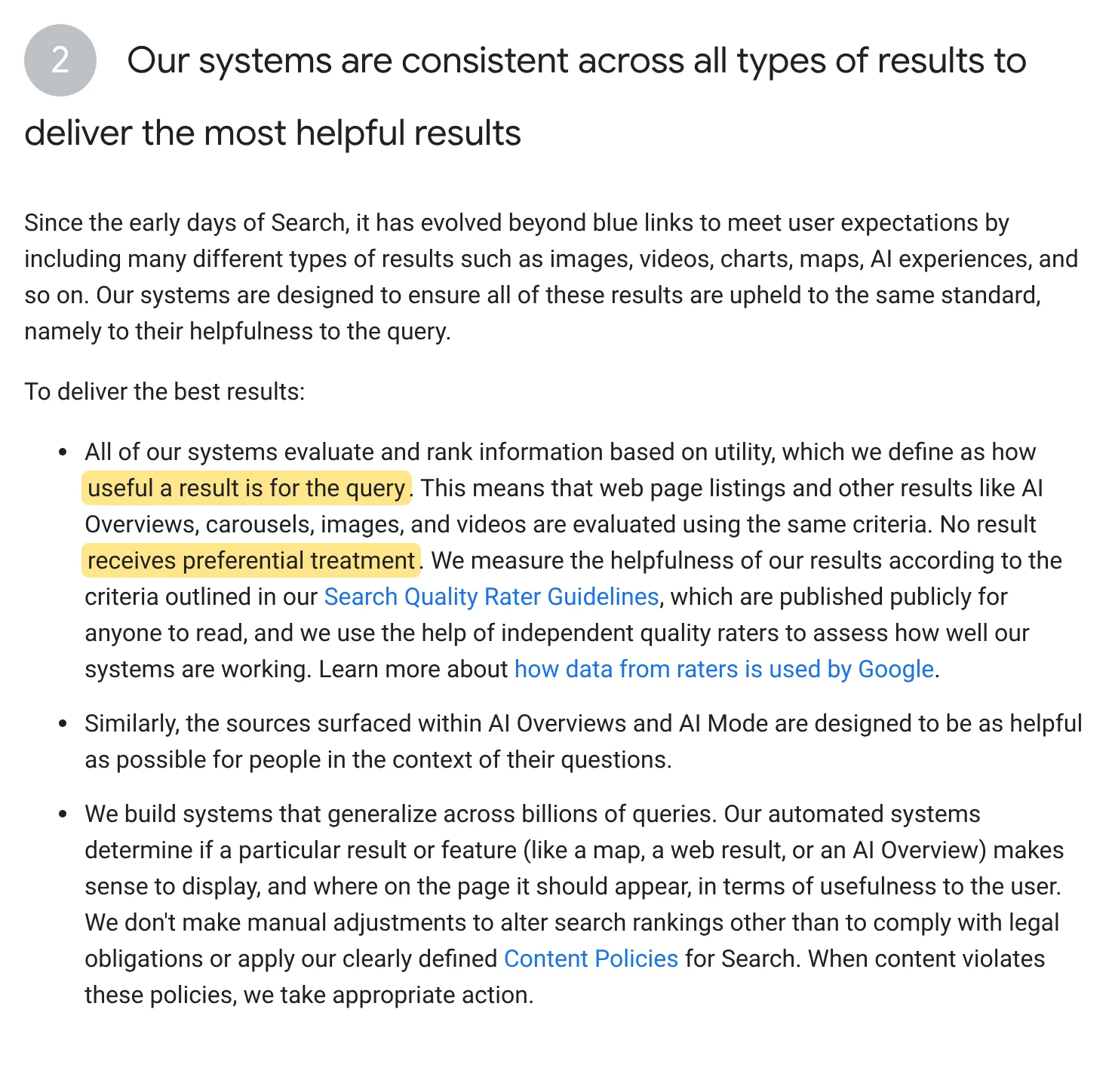
The page adds that sources in AI Overviews and AI Mode are chosen to be helpful in the context of the question. How that selection works is covered in our Google AI Overviews guide. Our read: these are the "objective and non-discriminatory criteria" the CMA asked Google to explain, written as principles. The page gives no data to test them against.
#How ranking feedback and appeals work
Once a significant ranking change or policy update is on the dashboard, verified site owners can use the Submit Feedback button in Search Console and name the update as a hashtag. Google asks for a Performance report snapshot, the exact queries with country and language, your affected URLs next to the competing URLs that rank, when and how traffic changed, and why the current results fail searchers. A last field asks how the change affected a UK market you are active in.
Engineers review feedback in aggregate to find systemic issues. Sending it does not lead to manual ranking changes for individual URLs. Our read: the UK market field matches the CMA rule that Google must report to the regulator when 50 publishers give feedback on the same change.
The page also gathers the appeal routes in one list:
| Route | Who it is for |
|---|---|
| Reconsideration request in the Manual actions report | Sites with a manual action for spam, after fixing every affected page |
| Counterfeit goods appeal | Pages removed under the counterfeit goods policy |
| SafeSearch review | Sites flagged as explicit. After fixes, wait 2 to 3 months before asking. |
| DMCA counter notice | Content removed after a copyright request |
| UK CMA indexing appeal | Sites serving UK users that were manually excluded from the index as a whole. The link goes live on December 17, 2026. |
| EU DMA appeal | Sites in the European Economic Area that meet the DMA access conditions but do not appear in Search |
#What to check
- Add the dashboard's Atom feed,
https://status.search.google.com/en/feed.atom, to a feed reader or team channel. The rollout start then reaches you on the day Google posts it. - Export the Search Console Performance report for the days after the November update completed, before the December one starts. That gives you a clean baseline for each update.
- Check that the people who would file feedback are verified owners of each Search Console property. The Submit Feedback route is open to verified owners only.
- Keep a list of affected queries, countries and competing URLs while a rollout runs. The feedback form asks for them, and they are hard to rebuild weeks later.
- If your whole site was manually removed from the index and you serve UK users, note December 17, 2026. Until then the indexing appeal link does nothing.
#What Google doesn't say
- How many days of notice it will give. The stay-informed page promises "advance notice timelines" and lists none.
- Whether anyone replies to feedback. Submissions are reviewed in aggregate, and the page is silent on any answer to the sender.
Sources
- December 2026 core updateGoogle Search Status Dashboard, November 24, 2026
- November 2026 core updateGoogle Search Status Dashboard, November 10, 2026
- Latest Google Search documentation updatesGoogle Search Central, November 24, 2026
- Google Search ranking hubGoogle Search Central, November 24, 2026
- Our principles for ranking resultsGoogle Search Central, November 24, 2026
- How to stay informed on Google Search ranking updatesGoogle Search Central, November 24, 2026
- Submit feedback about ranking changes in Google SearchGoogle Search Central, November 24, 2026
- Google December 2026 Core Update Preannounced - Complex Queries & PersonalizationSearch Engine Roundtable, November 24, 2026 (reporting)
- Google Announces December 2026 Core Update Ahead Of RolloutSearch Engine Journal, November 24, 2026 (reporting)